
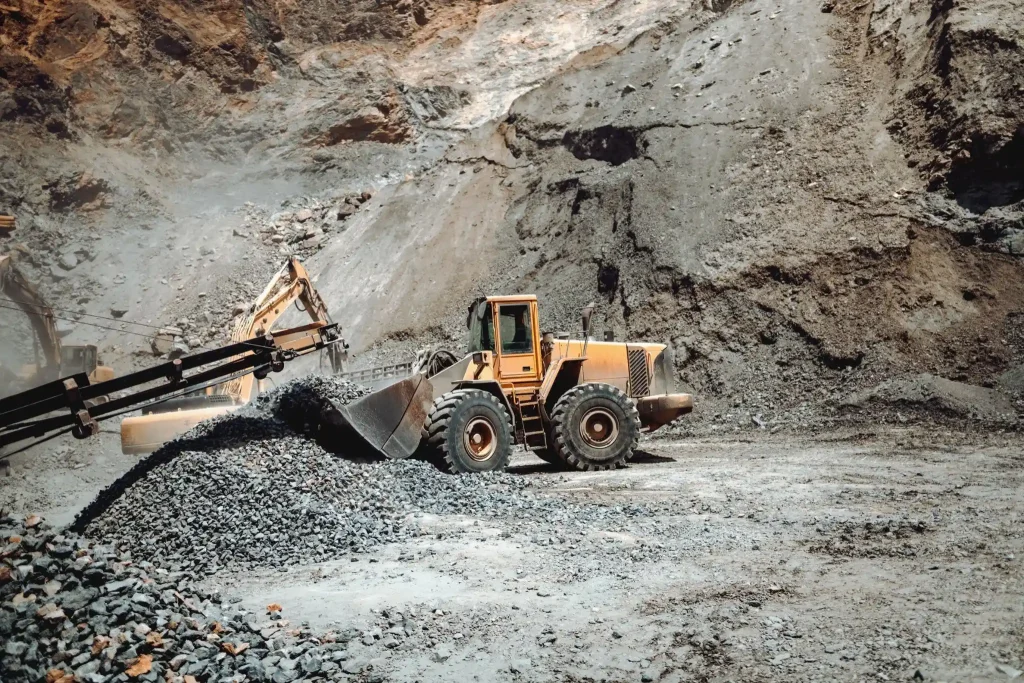
Mining stocks often draw attention because of their potential for high returns, especially during commodity booms. Experienced investors understand that these opportunities come with serious trade-offs. The sector is known for sharp price swings and unpredictable performance. Mining stock risks are not always obvious at first glance, especially when prices are rising quickly. This is why deeper analysis becomes important for anyone looking to invest with confidence and long-term thinking.
Market volatility and commodity price dependence
Mining companies depend heavily on the prices of the resources they extract. When commodity prices rise, mining stocks usually follow. When prices fall, these stocks can drop just as quickly. This direct connection creates a level of volatility that is higher than that of many other sectors. Mining stock risks increase when investors rely too much on short-term price movements instead of long-term trends and fundamentals.
Price cycles and timing challenges
Commodity markets move in cycles that can be difficult to predict. Even experienced investors struggle to time entries and exits perfectly. A company may be performing well operationally, but its stock price can still decline if the underlying commodity weakens. Mining stock risks become more visible when timing decisions are based on market sentiment rather than careful analysis of long-term cycles.
Supply and demand imbalances in global markets
Global supply and demand shifts can quickly affect prices. Overproduction can lead to falling prices, while shortages can create sudden spikes. These changes are often influenced by factors outside a company’s control, such as global economic conditions or policy decisions. Mining stock risks are closely tied to these external forces, making it important to monitor broader market trends.
Operational risks in mining companies
Mining is a complex business that involves physical operations in challenging environments. Even well-managed companies can face unexpected issues. Production delays, equipment failures, and logistical problems can all impact performance. These operational challenges make mining stock risks more difficult to manage compared to industries with more predictable processes.
Production delays and cost overruns
Projects often take longer than expected to complete. Delays can increase costs and reduce profitability. Investors may lose confidence when timelines are not met, leading to stock price declines. Mining stock risks rise when companies fail to control costs or communicate realistic timelines to the market.
Resource estimation errors
Estimating the size and quality of a resource is not always accurate. Early projections can differ significantly from actual results once mining begins. If a deposit is smaller or of lower quality than expected, the financial impact can be severe. Mining stock risks increase when investors rely too heavily on initial estimates without considering uncertainty.
Political and regulatory uncertainty
Mining operations often take place in regions with changing political environments. Governments can introduce new regulations or alter existing policies. These changes can affect profitability and operational stability. Mining stock risks are higher in countries where laws are less predictable or where political conditions are unstable.
Changing mining laws and taxation
Governments may increase taxes or introduce stricter regulations. These changes can reduce profit margins and create uncertainty for investors. Companies must adapt quickly to new rules, which can be costly and time-consuming. Mining stock risks grow when regulatory environments shift unexpectedly.
Resource nationalism and government intervention
Some governments seek greater control over natural resources. This can lead to increased ownership requirements or restrictions on foreign investment. In extreme cases, assets may be nationalized. Mining stock risks become significant when political decisions override market conditions and business planning.
Environmental and sustainability pressures
Environmental concerns play a growing role in the mining industry. Companies are expected to meet strict standards and address social impacts. These expectations can increase costs and create additional challenges. Mining stock risks now include factors related to sustainability and public perception.
Environmental compliance costs
Meeting environmental regulations often requires significant investment. Companies must manage waste, reduce emissions, and protect surrounding ecosystems. These efforts can increase operating costs and reduce profitability. Mining stock risks rise when compliance becomes more expensive than anticipated.
Social responsibility and community conflicts
Mining projects can affect local communities. Disputes over land use or environmental impact can delay projects or lead to legal challenges. Companies that fail to manage these relationships may face reputational damage. Mining stock risks increase when social factors are not handled carefully.
Financial structure and capital intensity
Mining is a capital-intensive industry that requires a large upfront investment. Companies often rely on debt or external funding to develop projects. This creates financial pressure, especially during periods of low commodity prices. Mining stock risks are closely linked to how well a company manages its finances.
High capital expenditure requirements
Developing a mine requires significant investment in equipment, infrastructure, and labor. These costs must be recovered over time, which depends on consistent production and favorable market conditions. Mining stock risks increase when projects require more capital than initially planned.
Debt management and financing risks
Companies with high debt levels may struggle during downturns. Interest payments can reduce cash flow and limit flexibility. If revenue declines, financial stability may be threatened. Mining stock risks become more pronounced when companies rely heavily on borrowing.
Management quality and decision-making risks.
Leadership plays a critical role in mining success. Poor decisions can lead to costly mistakes and lost opportunities. Investors need to evaluate management teams carefully. Mining stock risks often reflect the quality of leadership and their ability to execute strategies effectively.
Poor capital allocation decisions
Investing in the wrong projects can waste resources and reduce returns. Companies must choose opportunities carefully and manage spending wisely. Mining stock risks increase when management fails to prioritize high-value projects.
Transparency and reporting issues
Clear communication builds trust with investors. When companies provide limited or unclear information, uncertainty increases. Investors may react negatively to a lack of transparency. Mining stock risks grow when reporting standards are weak.
Exploration and development uncertainty
Early-stage mining projects carry a higher level of uncertainty. Exploration results may not lead to profitable operations. Development can take years and requires regulatory approval. Mining stock risks are especially high during these early phases.
Geological uncertainty and drilling risks
Exploration involves testing and analysis, but results are not guaranteed. Drilling may not confirm expected resources. This uncertainty can lead to significant losses for investors. Mining stock risks increase when projects depend on unproven deposits.
Delays in project approvals
Regulatory approvals can take longer than expected. Delays can increase costs and reduce investor confidence. Companies must navigate complex processes to move projects forward. Mining stock risks rise when timelines become uncertain.
Currency and macroeconomic exposure
Mining companies operate globally and are affected by currency movements and economic conditions. Exchange rate changes can impact revenue and costs. Broader economic trends also influence demand for commodities. Mining stock risks are closely tied to these external factors.
Currency fluctuations impact
Revenue may be earned in one currency while costs are incurred in another. Changes in exchange rates can affect profitability. Companies must manage this exposure carefully. Mining stock risks increase when currency movements are unpredictable.
Inflation and cost pressures
Rising costs for labor, energy, and materials can reduce margins. Inflation affects both operational expenses and project budgets. Companies must adapt to maintain profitability. Mining stock risks grow when costs rise faster than revenue.
Liquidity and market access risks
Some mining stocks, especially smaller companies, have limited trading activity. This can make it difficult to buy or sell shares at desired prices. Liquidity issues can affect investment decisions. Mining stock risks increase when market access is restricted.
Low trading volumes in junior miners
Junior mining companies often have lower visibility and fewer investors. This leads to limited trading activity. Prices can be more volatile due to low liquidity. Mining stock risks are higher in these situations.
Difficulty exiting positions
Selling shares quickly may not always be possible. Investors may need to accept lower prices to exit positions. This creates additional risk during market downturns. Mining stock risks become more challenging when liquidity is limited.
Risk mitigation strategies for experienced investors
Managing risk requires a structured approach. Investors need to combine research with disciplined decision-making. Mining stock risks can be reduced but not eliminated. The goal is to make informed choices that balance potential rewards with acceptable risk levels.
Diversification across commodities
Investing in different types of mining companies can reduce exposure to a single commodity. Diversification helps balance performance across market cycles. Mining stock risks become more manageable when investments are spread across multiple areas.
Evaluating fundamentals beyond hype
Strong fundamentals provide a better foundation for investment decisions. Investors should focus on financial health, management quality, and project viability. Mining stock risks are easier to navigate when decisions are based on detailed analysis rather than market excitement.
Conclusion: Balancing opportunity with calculated risk
Mining stocks offer unique opportunities but come with significant challenges. Understanding mining stock risks is essential for making informed decisions. Experienced investors focus on long-term strategy rather than short-term gains. By carefully evaluating each factor, it is possible to approach this sector with greater confidence and control.